Loading page…
Loading page…






The Affilitizer browser extension shows you affiliate programs directly in Google results. No extra clicks—see advertisers at a glance.
AI-led shopping is driving 14% conversion rates, forcing the affiliate industry to abandon cookies in favor of API-driven 'inline' link injection and S2S attribution.
The rise of agentic commerce is fundamentally altering the path to purchase, shifting the "front door" of shopping from search engine results pages (SERPs) to high-utility conversational interfaces. Industry reports suggest that by 2026, the industry is projected to reach a tipping point where AI chatbots are no longer viewed merely as customer support appendages but as primary sales drivers capable of delivering conversion rates that dwarf traditional e-commerce metrics.
For the affiliate industry, this represents a structural shift. The traditional model—relying on a user clicking a link on a static blog post to drop a cookie—is being challenged by a dynamic, "inline" shopping experience where the AI assistant facilitates discovery, comparison, and sometimes the transaction itself. As these AI agents begin to mediate the relationship between consumer intent and merchant fulfillment, publishers and networks are scrambling to integrate affiliate monetization directly into the chat stream.
The compelling argument for the transition to conversational commerce lies in the raw performance data. According to research from Insiderone and Gladly, shoppers who engage with AI chat convert at a rate of 12.3% to 14%, a stark contrast to the 3.1% industry average for traditional browsing [5][10][17].
This "conversion premium" isn't accidental; it is attributed to AI’s ability to guide the shopping experience. By transforming shopping from a browse-and-click experience into a guided conversation, AI systems can answer specific questions and surface personalized recommendations that traditional static filters often miss [1][2][7].
Some analyses suggest that beyond conversion rates, the Average Order Value (AOV) also sees a material lift. By surfacing relevant upsells and reducing indecision through context-aware responses, conversational AI can help brands maximize the value of every session [1][6]. This shift is moving the "pre-purchase" phase—product discovery and comparison—directly into the chat bubble, potentially capturing the user's intent at its highest point [2][6].
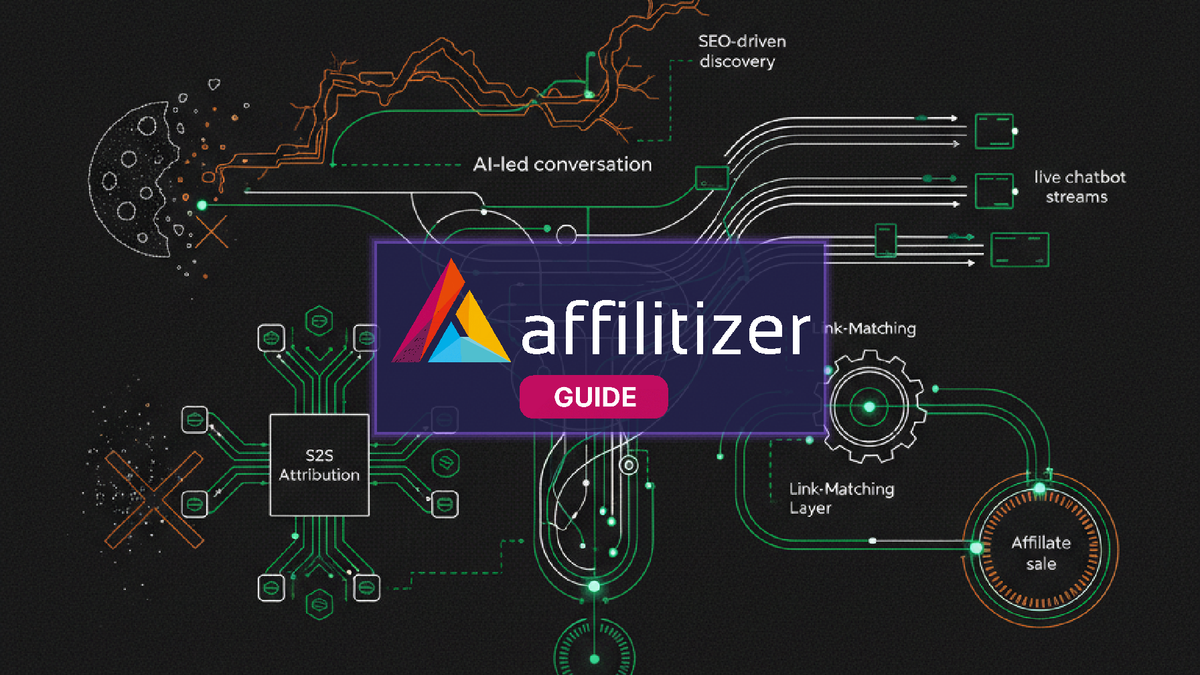
For affiliate publishers, the technical challenge is no longer about placing a banner; it is about "link resolution" in milliseconds. An emerging implementation pattern involves a four-step automated workflow designed to integrate affiliate monetization into chatbot interactions.
A critical operational hurdle is latency. If the link resolution process takes too long, it degrades the conversational flow. Some advanced publishers are exploring methods to inject affiliate links into chunks of text as the model generates them, rather than waiting for the entire response to finish. This aims to ensure the recommendation feels native and instantaneous.
The transition from "browse-and-click" to "chat-and-convert" is no longer a futuristic projection; it is the current reality of performance marketing. According to industry analysis, by 2026, the publishers who have successfully integrated into the AI conversation path are expected to see conversion rates that were previously unthinkable in the digital space.
While the threat of AI agents bypassing traditional links is real, the opportunity to capture intent through guided, conversational selling represents the most significant expansion of the affiliate model since the invention of the tracking pixel. The path forward is clear: publishers must stop being mere destinations and start becoming the intelligent guides that lead consumers through the final mile of the transaction.
Stay ahead of the commerce-AI shift. Subscribe to the Affilitizer Newsletter for weekly deep dives into agentic commerce and the future of performance attribution, as suggested by industry experts.
This article was created with AI assistance and editorially reviewed.
Term
The transition to AI assistants poses a direct threat to the "last-click" cookie-based model that has dominated affiliate marketing for two decades. When an AI agent performs comparisons or uses browser automation to complete a purchase, it often bypasses the traditional referral pages where cookies are set [1][4].
Industry data suggests that while human-initiated clicks from an AI recommendation will still trigger cookies, purchases completed directly by an AI agent (where the AI buys via API) can pose a risk of the affiliate not being credited [1][3][4].
To combat this, the industry is shifting toward Server-to-Server (S2S) postback tracking. In this setup:
This method is significantly more resilient to browser privacy changes and the "cookie-less" behavior of AI agents, providing a stable attribution layer for the next decade of performance marketing [1][5].
The move to AI-driven conversion paths is forcing a reorganization of affiliate business models. Traditional "top-of-funnel" publishers—those who rely on SEO-driven listicles and gift guides—are most exposed. According to market analysts, as AI tools like leading AI models answer "What should I buy?" directly, traffic to traditional review sites is likely to decline [5][8].
However, this also creates a new category of affiliate-enabled AI apps. We are seeing a shift where developers are no longer building content sites, but are building "shopping assistants" that use affiliate commissions as their primary monetization engine [2][3][9]. Operationally, this requires a shift in headcount from content creators and SEO specialists to prompt engineers and API integration specialists.
The revenue potential for conversational affiliate marketing is substantial but varies by vertical. Some industry analyses indicate commission rates in this new path typically range from 1% to 30%, consistent with traditional models, and the higher conversion rates (12.3%+) mean the Earnings Per Click (EPC) can be significantly higher than standard display or text-link ads [2][5][15].
Key Monetization Trends:
From a long-term perspective, industry observers note we are witnessing the upstream migration of discovery. For many years, discovery happened on Google or social media, and conversion happened on the merchant site. In the new conversion path, discovery and the decision-making process are unified within the AI interface.
The strategic risk is "algorithmic invisibility." Market analysts suggest that if a publisher's data is used to train an LLM, but the LLM doesn't cite the source or include a tracked link, the publisher risks losing both traffic and revenue. Consequently, some industry experts predict the most successful affiliate players of the next five years will be those who control the interface (the chatbot itself) rather than just the content.
Source: Perplexity Research