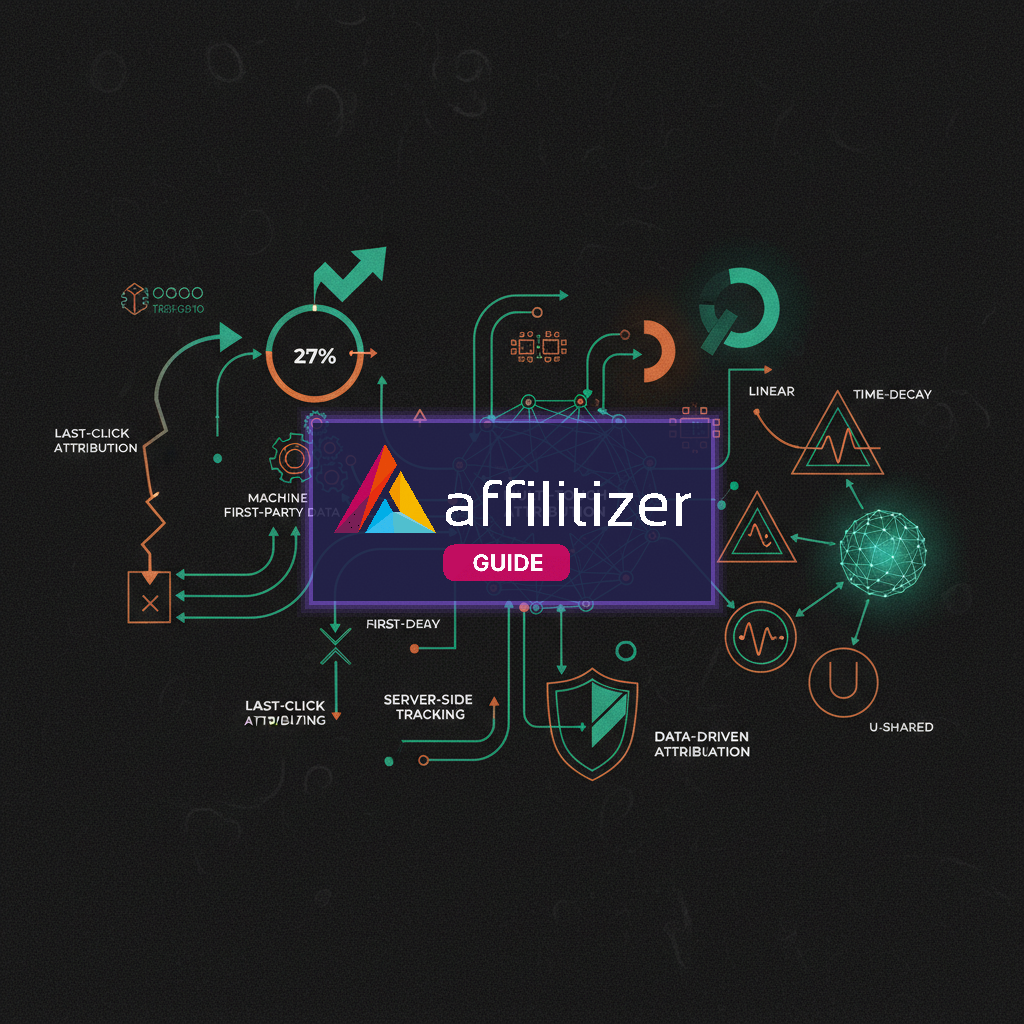
Data-Driven Performance Replace Last-Click
Affiliate marketing historically relied on a flawed principle: last-click attribution. The publisher whose link was the last one clicked before a sale received 100% of the commission. This model created a distorted view of value. It over-rewarded closing channels. It ignored the role of affiliates in the initial discovery and consideration phases. In 2026, this model is no longer tenable.
Multi-Touch Attribution (MTA) powers the shift to a holistic performance view. MTA is an analytics framework. It distributes credit for a conversion across multiple touchpoints in the user’s path. The system recognizes that a customer might discover a product through a blog, read reviews on an affiliate site, and finally use a coupon code. This guide details how MTA works, the available models, and the strategic implications for growth.
The Problem With Closing-Only Attribution
Attributing a conversion solely to the final interaction is commercially illogical. This approach undervalues publishers who create initial awareness, such as reviewers and editorial sites. It disproportionately rewards coupon and loyalty sites that capture the user at the end of the funnel.
Relying on last-click causes inefficient budget allocation. Advertisers may defund top-of-funnel affiliates while believing they do not perform. In reality, these partners generate the initial interest. A 2023 Study by Ruler Analytics found that 78% of marketers who switched to MTA gained better performance insights. These marketers drove a 15-20% uplift in program efficiency by re-investing in previously undervalued partners.
MTA provides a granular view of the conversion path. It shows which partners introduce new customers and which ones close the sale. Partnerize's 2024 Affiliate Marketing Benchmark Report revealed that programs using MTA saw a 27% increase in attributed affiliate revenue.
Selecting the Right MTA Model
The right choice depends on the business model and sales cycle length. Affiliate publishers must understand these models to assess program fairness.
Rule-Based Models
Rule-based models distribute credit using fixed formulas.
- Linear: Distributes credit equally across all touchpoints. A journey with four touchpoints assigns 25% credit to each.
- Time-Decay: Gives more credit to touchpoints closer to the conversion. This works for short sales cycles like fast fashion. It can undervalue discovery affiliates in B2B cycles.
- Position-Based (U-Shaped): Assigns 40% of credit to the first touchpoint, 40% to the last, and splits 20% among the middle. This values both the introducer and the closer.
- W-Shaped: Evolution of the U-Shaped model. It assigns weight to the first touch, lead creation, and opportunity creation.
Data-Driven Attribution
Data-driven attribution (DDA) uses machine learning to analyze historical data. It assigns credit based on the actual contribution of each touchpoint. A touchpoint appearing frequently in converting journeys receives more credit.
According to Impact.com, 62% of affiliate programs using MTA have opted for a data-driven model. Research from Forrester in 2024 estimates that DDA in Google Analytics 4 can boost affiliate visibility by up to 40%.
Implementation in a Cookieless Market
Major affiliate platforms now offer native MTA tools.
- Impact.com provides Partner Journey Analytics. Internal data from 2024 showed this feature increased affiliate-attributed revenue by an average of 32%.
- Tune allows for custom MTA rules. A 2023 case study showed an 18% improvement in ROAS via this flexibility.
- Google Analytics 4 (GA4) serves as a central tool. Its default data-driven model provides an entry point for integrating affiliate link parameters.
The phase-out of third-party cookies in 2025 forced a pivot to first-party data. Modern MTA solutions from Triple Whale and Northbeam send conversion data directly from a server to the marketing platform. This method bypasses the browser. Industry reports indicate that 45% of affiliate conversions now involve probabilistic modeling or non-cookie methods.
Revenue and Payout Impact
Adopting MTA improves marketing intelligence. Brands move beyond reliance on high-volume, last-click publishers. They foster an ecosystem of content and influencer partners. A 2024 McKinsey study found that while MTA adds 10-20% to tracking overhead, it delivers a 2-3x ROI.
Under a last-click model, a content creator receives nothing if a user later clicks a cashback link. Under a U-Shaped model, that creator receives 40% of the commission. This shift enables publishers to monetize top-of-funnel educational content.
Advertisers can implement dynamic commission structures. A publisher driving a first touch from a new customer could earn a higher bounty. MTA provides the data to execute these fairer payout strategies.
Cross-Device Measurement as a Requirement
The affiliate industry is moving toward a model based on incremental value. The focus shifts from "who got the last click" to "which combination delivered the highest ROI."
Because 72% of consumers shop across multiple devices, cross-device attribution is necessary. Solutions must connect a user’s journey from a phone to a laptop via logins or IP signals. Publishers and advertisers who master this tech stack gain a durable competitive advantage.
Action Plan for Publishers
- Audit Analytics: Use GA4 to identify which content drives discovery.
- Request MTA Data: Prioritize networks that provide granular data beyond last-click.
- Expand Content: Produce awareness-building articles that MTA models can now credit.
- Capture First-Party Data: Use email newsletters to enable deterministic tracking.
- Test Models: Join programs using Linear or U-Shaped models to compare earnings.
- Use Server-Side Tracking: Implement server-side analytics to prove value independent of browser limitations.

Affilitizer Editorial Team
This article was created with AI assistance and editorially reviewed.